

Hello lovely readers!! Welcome back to another bit on Olives Corner. As always I’m excited to share my passion for mental health with you, opening your eyes to everyday disorders that we usually do not notice. Today we will be talking about OCD, Obsessive-Compulsive Disorder; rarely spoken about or given attention to in Ghana or even Africa. Let’s take some time to unpack each word; obsessive, compulsive, and disorder.
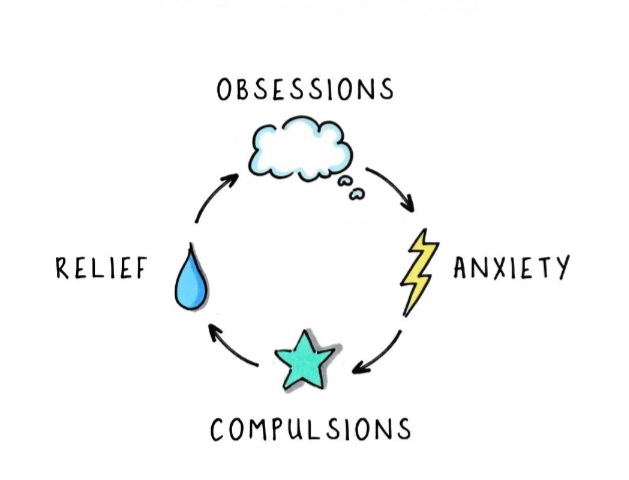
Obsessions are thoughts or ideas that continually preoccupy someone’s mind over and over. They can have a very destructive effect on a person. Often time’s people with OCD do not enjoy these thoughts and they usually find them very disturbing. These obsessive thoughts usually do not make sense and individuals with OCD know it!!!
The powerful and uncomfortable emotions that frequently accompany obsessions include anxiety, contempt, doubt, and the need to accomplish things “exactly right.” Obsessions are intrusive, unwelcome thoughts, desires, or ideas that cause incredibly upsetting feelings. These feelings cause anxieties and can escalate to panic or anxiety attacks. Let me bring it into more relatable terms.
Now and then most of us have unwanted thoughts, such as thinking we may have forgotten to lock the door, or even sudden unwelcomed violent, or offensive mental images. But if these unpleasant thoughts are persistent and dominate your thinking or mental faculties to the point where it affects your daily functioning, you may have an obsession.
Some common thoughts that plague people with OCD include:
- fear of deliberately harming yourself or others – for example, fear you may attack someone else, such as your children
- fear of harming yourself or others by mistake – for example, fear you may set the house on fire by leaving the cooker on
- fear of contamination by disease, infection, or an unpleasant substance. You may feel the need to ensure that your surroundings are free of germs, bacteria, or even dust.
- a need for symmetry or orderliness – for example, you may feel the need to ensure all the labels on the tins in your cupboard face the same way
You may have obsessive thoughts of a violent or sexual nature that you find repulsive or frightening. But they’re just thoughts; having them does not mean you’ll act on them.
Compulsions are actions someone takes to suppress their obsessions and/or lessen their suffering. They can also be known as repetitive behaviors or mental acts that a person with OCD feels driven to perform due to the anxiety and distress caused by the obsession.
It’s possible to just have obsessive thoughts or just have compulsions, but most people with OCD experience both.
Compulsions start as a way of trying to reduce or prevent anxiety caused by the obsessive thought, although in reality, this behavior is either excessive or not realistically connected. For example, a person who fears contamination with germs may wash their hands repeatedly, or someone with a fear of harming their family may have the urge to repeat an action multiple times to “neutralize” the thought.
Most people with OCD realize that such compulsive behavior is irrational and makes no logical sense, but they cannot stop acting on it and feel they need to do it “just in case”.
Common types of compulsive behavior in people with OCD include:
- cleaning and hand washing
- checking – such as checking doors are locked or that the gas is off
- counting
- ordering and arranging
- hoarding
- asking for reassurance
- repeating words in their head
- thinking “neutralizing” thoughts to counter the obsessive thoughts
- avoiding places and situations that could trigger obsessive thoughts. Not all compulsive behaviors will be obvious to other people
Now, this is where the trouble is because people who have OCD show a lack or impairment in social functioning or occupational settings. Their relationships tend to become very rigid, formal, and distant because one party has traits of perfectionism and tends to be over-controlling.
For a diagnosis of obsessive-compulsive disorder to be made, this cycle of obsessions and compulsions becomes so extreme that it consumes a lot of time and gets in the way of important activities that the person values.
People living with this disorder are all around us and most of them may not even know that they have OCD, give them the benefit of the doubt, be kind and patient with people, and do not fault them for being overly cautious or laughing at them for being neat freaks, the anxiety they go through within comes with so much discomfort they would wish they were different. The people run the risk of going into a state of depression.
If you know someone with this disorder, or if you have figured out that you may have OCD, kindly speak to a mental health professional to help get you on a behavioral management plan.
Till I come your way again, this has been Olives Corner. See you in the next issue.
American Psychiatric Association (2013)
Diagnostic and Statiscal Manual Disorders (DSM-5)
Understanding Abnormal Behaviour (9th Edition)
 Olives Corner
Thanks for this educative piece Olive…Me thinks me might have to see a therapist for diagnosis soon.
Keep them coming 👍
LikeLiked by 1 person