
Hello lovely readers, I am back again with another blog to guide you into a known but misunderstood aspect of mental health. Today we are going to be talking about Schizophrenia.
Schizophrenia unlike certain disorders cannot be defined by one symptom. It is defined by its characteristics. Schizophrenia has an array and wide range of symptoms which are individual disorders in their own. Over the years the nature of schizophrenia has made it very hard for professionals to diagnose or even treat. In the past certain individual disorders were classified as schizophrenia but research has been able to accurately fish out the determinants of schizophrenia.
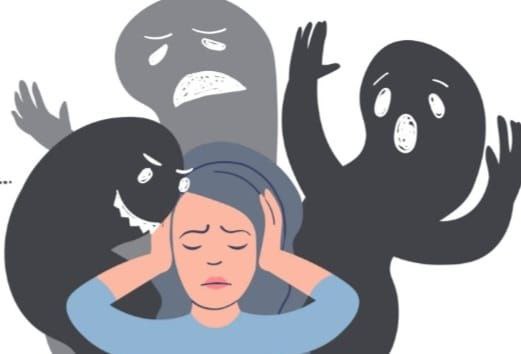
Research has shown that people with schizophrenia usually have hallucinations, delusions, feel like they are being manipulated or even hear voices. A case study revealed that an individual with schizophrenia may usually describe himself as being in another world or see things with a different perspective. As such schizophrenics who are able to get or receive treatments tend to become very artistic individuals.
Signs
Schizophrenia has 3 categories of symptoms, positive, negative and cognitive symptoms.
Positive symptoms do not mean good but these symptoms include unusual thoughts or perceptions such as delusions, hallucinations, thought disorder (incoherent thought-speech pattern). These kinds of symptoms increase with stress and disappear with treatment. Positive schizophrenic symptoms simply deal with the distortion of perception.
Negative symptoms of schizophrenia are associated with the inability or decreased ability to initiate actions or speech, emotions, or feel pleasure. Such symptoms include avolition (an inability to take action or become goal-oriented), alogia (a lack of meaningful speech), and flat affect (little or no emotion in situations in which strong reactions are expected). Negative signs of schizophrenia are those that involve the absence of a characteristic shared by the majority of persons. Lack of motivation, social connection, and communication are a few examples of this. Negative symptoms can be just as difficult to deal with, although being less evident than positive symptoms like hallucinations and delusions.
Cognitive symptoms of schizophrenia have to deal with problems with attention, memory and difficulty in developing an action plan, taking a decision or properly handling anything that has to do with their mental faculties. Unlike people with a healthy mental capacity, people with schizophrenia have severe cognitive impairments.
To make these symptoms a bit easier to understand, here are a few examples or instances to illustrate.
Positive Symptom- Bill always carries a pen knife around because he believes that everyone who approaches him wants to harm him even if they don’t and that every single person he walks by is talking about him. Bill in this case is suffering from delusions of persecution and reference.
It’s a general myth that people who suffer from delusions or hallucinations accept them to be reality. This statement is false because the strength of a delusion on a schizophrenic varies from individual to individual. Most people are able to identify certain aspects of their “new reality” as not real.
Hallucinations are distorted sensory perceptions, for example, an individual hearing voices telling him that jumping off the roof would give him the lift off he needs to fly like a bird.
Negative Symptom- A patient, for instance, might explain in detail how parts of his or her body are burning up but show absolutely no concern or worry through voice tone or facial expression. Due to the inability of patients to express their emotions bodily they may express it through art, poetry or even music.
Cognitive symptom- Erinn, the best student in the class suddenly starts to regress academically. She also lacks the mental capacity to take basic decisions which would affect her directly.
Although the symptoms have been stated here, kindly note that only a psychologist or psychiatrist is fit to diagnose an individual as being schizophrenic therefore please speak to any of these personnel before jumping into conclusions.
Schizophrenia receives a great deal of attention because it can be a severely disabling disorder that has a profound impact on the individual and on family members and friends. It is popularly believed that even though genetics and family history are determinants of the occurrence of schizophrenia, research has also found that overwhelming stress (family-related, work-related, etc.) can cause a well-adjusted and relatively normal person to experience a schizophrenic breakdown.
I would like to end on this note, anyone and everyone is prone to a psychotic break, the world and economy is hard enough as it is, if you have the opportunity and the means to make someone’s life a little easier do it, if you can’t do not add up to his or her problems. Until I come to your screens again with more on Mental Health, this has been Olives Corner
Source: American Psychiatric Association (2013)
Diagnostic and Statiscal Manual Disorders (DSM-5)
Understanding Abnormal Behaviour (9th Edition
 Olives Corner
It’s good. I like the part where you brought in a note of caution for people to avoid a general diagnosis.
LikeLiked by 1 person
Great
LikeLike